
What Really Happens During a Board & Train Program (And Why It Works)
Sending your dog away for training is a big decision. For many owners, it’s the first time they’ve ever been separated from their dog, so it’s completely normal to have questions about what actually happens once your dog is dropped off.
The truth is, a quality Board & Train isn’t just about teaching your dog commands. It’s about changing habits, improving communication, building confidence, and giving owners the tools they need to continue that progress once their dog comes home.
Here’s what you should expect.
Why Board & Train Works
One of the biggest reasons Board & Train programs are so effective is consistency.
Most owners have busy lives. Between work, kids, vacations, sports, and everything else life throws at you, it’s difficult to train your dog every single day the way they truly need.
A Board & Train removes those inconsistencies.
Your dog is learning every day instead of squeezing training into a few minutes after work. That consistency builds habits much faster than weekly lessons ever could.
A new environment also allows many dogs to break old routines and learn with a fresh start.
Dog Training Takes Longer Than Most People Think
One of the biggest misconceptions I hear is:
“How long until my dog is trained?”
The honest answer?
Probably longer than you think.
Dog training isn’t something that’s ever truly finished.
Just because a dog has been “trained” doesn’t mean they’ll automatically self-regulate or make perfect decisions forever.
Dogs, just like people, need continued practice, structure, accountability, and guidance.
A Board & Train is an incredibly effective tool that puts your dog on the right path, but your long-term success depends on your consistency, your willingness to learn, and your commitment after your dog comes home.
The owners who see the best results are the ones who continue practicing and stay involved long after the program ends.
Be Careful of Short Board & Train Programs
You’ll notice we don’t offer one- or two-week Board & Train programs.
There’s a reason for that.
If every dog could truly be trained in one or two weeks, every trainer would be offering those programs.
Behavior change takes time.
Relationships take time.
Confidence takes time.
Real-world proofing takes time.
Learning takes time.
I jokingly call these extremely short programs the “McDonald’s approach to dog training.”
Fast sounds appealing.
Convenient sounds appealing.
But just like fast food, the quickest option isn’t always the healthiest or the one that produces the best long-term results.
With very short Board & Train programs, there’s often much more pressure placed on the dog to learn everything quickly. That usually means less time building a relationship, less repetition, less real-world exposure, and less time making sure behaviors truly become habits.
You may end up with a dog that looks trained during a demonstration but hasn’t had enough time to build reliable, lasting behavior.
Training shouldn’t feel rushed.
It should be thorough.
We Specialize in Pet Dogs
Not all dog training has the same end goal.
People often hear that a trainer has worked with police dogs, military dogs, protection dogs, or high-level sport dogs and automatically assume they’re the best choice for a family pet.
The reality is those dogs have very different jobs.
A police K9 isn’t expected to calmly settle under a table at a coffee shop.
A protection dog isn’t expected to quietly relax while your kids are playing in the living room.
A sport dog isn’t expected to ignore every distraction while walking calmly through your neighborhood.
Pet dog training is its own specialty.
Our goal isn’t simply obedience.
Our goal is to create a dog that’s calm, patient, reliable, and enjoyable to live with every day.
We spend a tremendous amount of time building duration, calmness, and emotional stability into every behavior we teach.
Anyone can teach a dog to sit for five seconds.
We want dogs that can calmly settle for an hour while your family eats dinner.
We want dogs that can relax at a coffee shop without constantly looking for the next distraction.
We want to create what I call the cool, calm, collected family dog—the kind of dog you can confidently take almost anywhere.
None of those other disciplines are better or worse. They simply have different goals. When you’re choosing a Board & Train program, make sure it’s designed to produce the type of dog you actually want to live with.
Great Pet Dogs Aren’t Built on Tricks
Here’s something that surprises a lot of people.
In many ways, pet dog training is actually one of the most “boring” styles of dog training—and that’s exactly how it should be.
We’re not trying to teach your dog twenty flashy tricks.
We’re not trying to create the most exciting dog in the neighborhood.
We’re trying to teach your dog one of the hardest skills of all…
How to do nothing.
How to relax.
How to settle.
How to simply exist without feeling the need to react to every person, every dog, every squirrel, every sound, and every distraction around them.
One of the biggest misconceptions in dog training is that the more commands your dog knows, the better trained they are.
In reality, a truly well-trained family dog only needs a small handful of commands performed at a very high level.
For most families, that’s:
- Heel
- Sit
- Down
- Place
- Come
- Stay
- Free
That’s it.
The magic isn’t in teaching twenty different commands.
The magic is teaching those few commands so well that your dog can perform them calmly, confidently, and reliably no matter what’s happening around them.
I’ve met plenty of dogs that know every obedience command imaginable plus ten or fifteen impressive tricks.
They can spin.
Roll over.
Play dead.
Jump through hoops.
Shake with both paws.
Yet their owners are still frustrated living with them every day.
Why?
Because obedience alone doesn’t create a calm dog.
Those dogs often haven’t developed the right mindset.
At The Art of K9, we spend just as much time developing a dog’s emotional state as we do teaching commands.
We’re constantly asking ourselves:
Can this dog relax?
Can they regulate themselves?
Can they calmly exist around distractions without feeling like they have to engage with everything around them?
I’d rather have a dog that knows six commands flawlessly than a dog that knows twenty commands inconsistently.
That’s what creates the dog everyone wants to live with.
The goal isn’t to have the dog that knows the most commands.
The goal is to have the dog that people forget is even there because they’re so calm, confident, and content simply lying beside you.
What Happens During the First Few Days?
The first few days aren’t about teaching flashy obedience.
They’re about building a relationship.
Every dog is different.
Before I start asking a dog for a lot, I want to understand who they are.
I spend time learning their personality, confidence level, motivations, triggers, strengths, and weaknesses.
Your dog also needs time to settle into a new environment.
That structure alone often begins changing behavior before formal training even starts.
Building the Foundation
Once your dog understands the routine and we’ve built communication together, that’s when we begin teaching the skills they’ll use every day.
That includes:
- Loose leash walking
- Heel
- Place
- Recall
- Sit
- Down
- Stay
- Impulse control
- Reliable obedience around distractions
These aren’t tricks.
They’re life skills that make living with your dog enjoyable.
Real-World Training Is What Matters
Anyone can teach a dog to listen inside a quiet building.
Real life isn’t quiet.
Dogs need to learn around:
- People
- Other dogs
- Children
- Parks
- Stores
- Outdoor restaurants
- Neighborhood walks
- Everyday distractions
That’s why we spend a tremendous amount of time training in real-world environments.
The goal isn’t obedience inside our facility.
The goal is obedience wherever life takes you.
Behavior Modification Happens Throughout the Program
Many dogs come to us for much more than obedience.
We regularly work with dogs struggling with:
- Reactivity
- Aggression
- Anxiety
- Fear
- Resource guarding
- Poor impulse control
- Overexcitement
These issues aren’t treated separately from obedience.
Everything works together.
As communication improves, confidence grows.
As confidence grows, behavior begins changing.
What Happens When Your Dog Goes Home?
One of the biggest mistakes owners make is thinking the training ends at pickup.
In reality, your dog’s education is just beginning.
Every Board & Train should include a thorough handoff where you’re taught exactly what your dog has learned and how to continue reinforcing those behaviors at home.
Your dog knows the expectations.
Now it’s your turn to learn them.
The owners who stay consistent, continue practicing, and remain committed almost always see the greatest long-term success.
Final Thoughts
A Board & Train isn’t magic.
It isn’t a shortcut.
It’s a powerful training tool that accelerates progress by giving your dog consistency, daily repetition, clear communication, and real-world experience.
When paired with owners who are dedicated, willing to learn, and committed to maintaining the training after the program ends, the results can be life-changing.
Why Owners Choose The Art of K9
At The Art of K9, we’ve built our Board & Train programs around one simple goal: creating calm, confident, reliable family dogs that owners can enjoy for years to come.
We intentionally keep a limited number of dogs in training so every dog receives individualized attention instead of becoming just another number.
Our 4, 6, and 8-week Board & Train programs are designed to build lasting habits—not just temporary obedience.
Every program includes owner education because our goal isn’t simply to train your dog.
Our goal is to teach you how to maintain those results for the rest of your dog’s life.
If you’re ready to build a stronger relationship with your dog and create reliable, real-world results, we’d love to help.
Call us today at (914) 980-5527 or apply online to schedule a consultation and find out which program is the best fit for your dog.
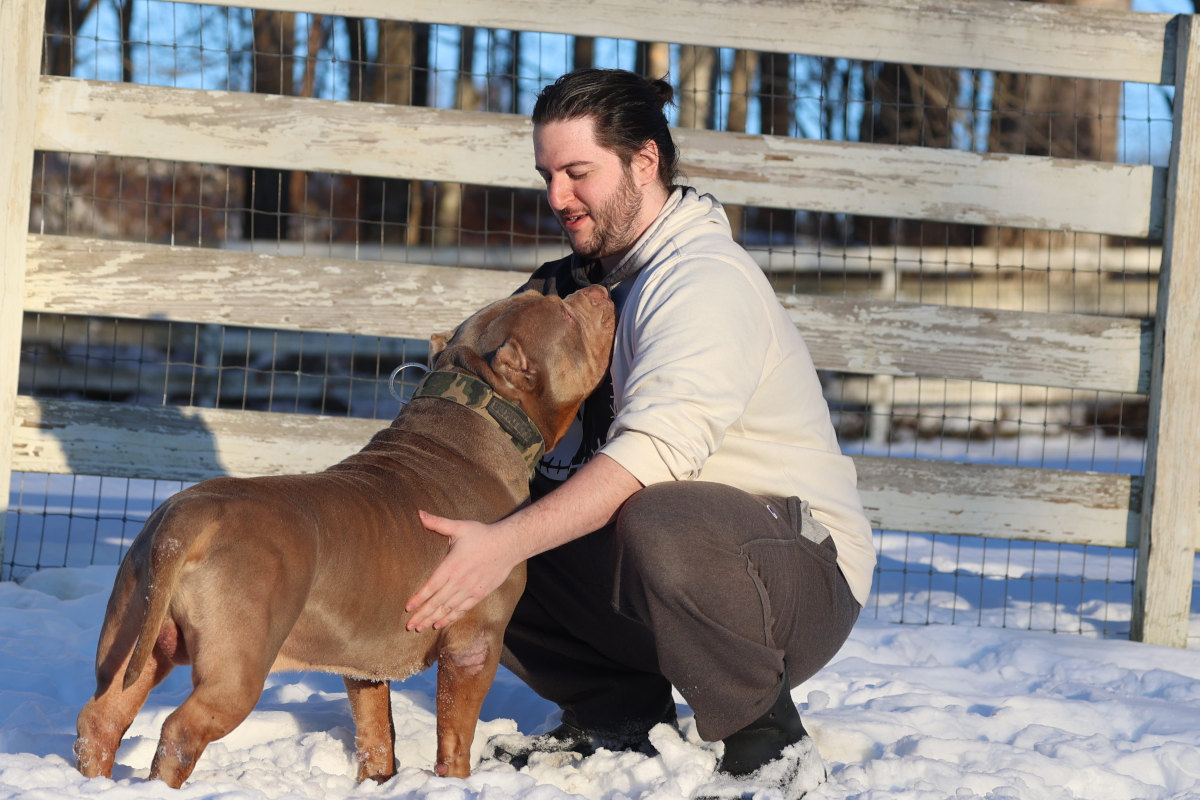
Angelo Presta is a Certified Master Dog Trainer and the owner of The Art of K9, a dog training business based in Harrison, NY, serving Westchester County and Fairfield County, CT. With a focus on structured, relationship-based training, Angelo works with dogs facing everything from basic obedience needs to serious behavioral challenges, including leash reactivity and aggression, through his Board & Train, private in-home, and virtual consultation programs.
Angelo intentionally limits his monthly intake of clients to ensure every dog and owner receives personalized attention, and he emphasizes lasting, real-world results over quick fixes, training dogs to behave reliably not just in a controlled setting, but at home, on walks, and around everyday distractions. Alongside hands-on training, he places a strong emphasis on owner education, equipping clients with the tools to maintain their dog’s progress long after training ends.